
Baseball and Time

Yesterday’s post on rules changes prompted this comment and question from Brilliant Reader Kevin:
Joe, this take caught my eye over the weekend and I was curious to hear your thoughts: “Isn’t the whole point of baseball that its [sic] the only sport without a clock or time? It existed in a permanent summer. School’s out. Time doesn’t exist. The sun, the green grass.” - Paul Skallas
I completely agree that the game is better with a quicker pace than what we’ve gotten the past few years. But, are we not losing something important by compromising this bright-line distinction between baseball and every other major American sport?
Thank you, Kevin. You reminded me of something that I have been wanting to say. Maybe we should add a recurring “Answer a Brilliant Reader’s Question” feature to JoeBlogs. You can let me know your thoughts on that in the comments.
For now, my answer to Kevin:
The first time I wrote about the pitch clock, years and years ago, Paul Skallas’ take was precisely my take. Baseball is meant to be the game without a clock. In fact, I wrote this:
Baseball — it’s an escape from clocks. Baseball is a vacation from clocks. In baseball, there is none of that time anxiety, none of the feeling that every second matters, none of that clock-watching. There’s a certain tranquility, a certain calm in the rhythms of baseball. I don’t want some stupid clock ticking behind a pitcher, people in the stands counting down, pitchers throwing at the last possible second. Baseball is at its best when you can melt into the game. Sure it’s a cliché, but when just right, baseball does feel timeless. Who brings a timepiece to a timeless game?
That was my first reaction, and I felt pretty sure about it.
Then I went to see a minor league game with a pitch clock, and I was like, “Oh, wait, this is a better brand of baseball. The pace is still relaxed and unhurried, it still feels like a summer day with school out, but there’s a forward motion to the game. There’s so much less standing around. And it feels familiar to me because this was how they played the game when I was young.”
And I became a pitch clock advocate. preaching my advocacy with the annoying zeal of the converted.
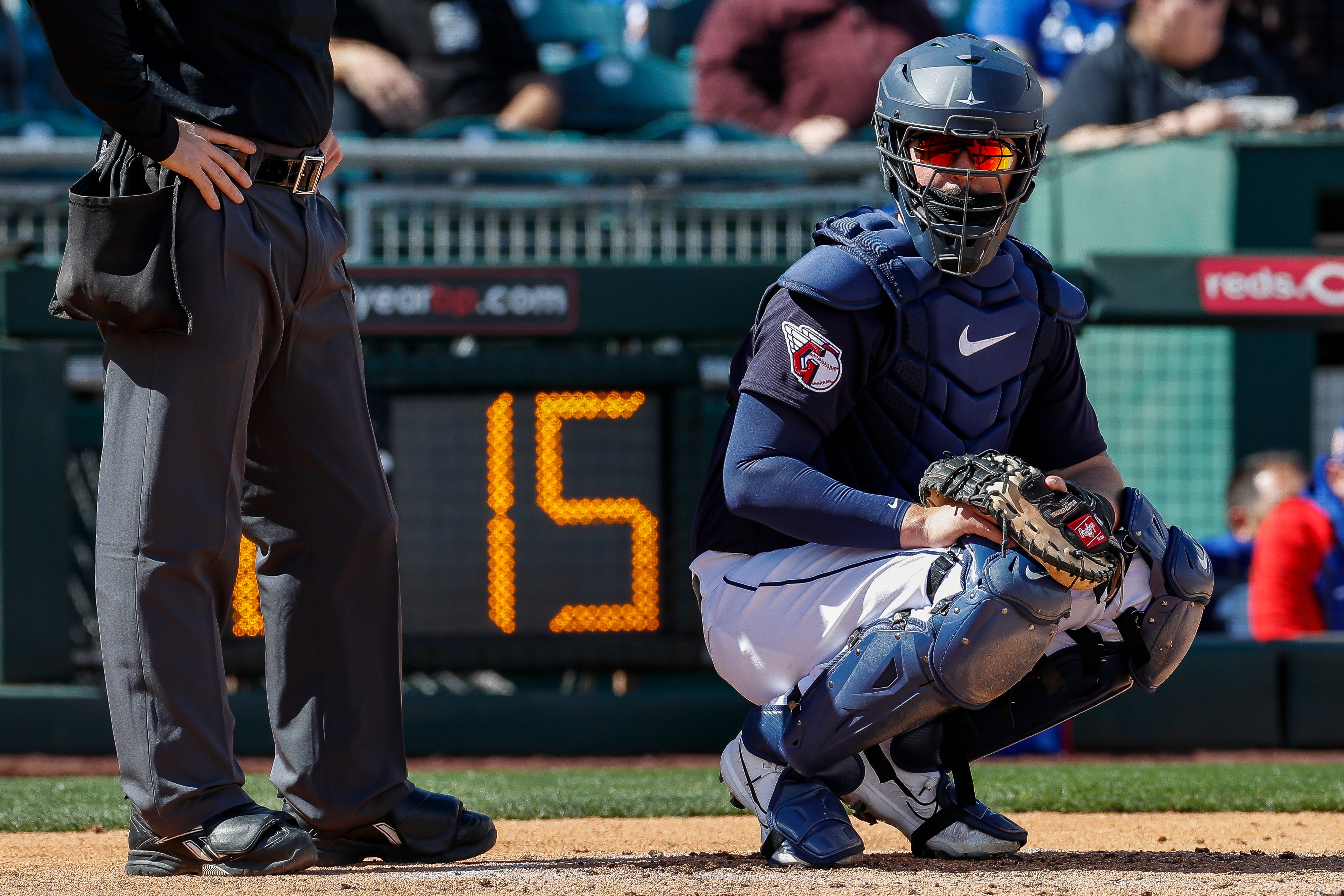
Since then, I’ve thought a lot about WHY I seem to be of two minds. On the one hand, I like the pitch clock very much. On the other hand, I still deeply believe in baseball as that game without a clock. I deeply believe timelessness — both literal and figurative — to be an awesome part of baseball’s magic.
How can I feel so strongly about seemingly contrasting beliefs?
I think it comes down to a couple of things. One is pretty simple: Baseball was always supposed to have a clock moving things along. True, it was supposed to be an inner clock rather than a blaring digital clock everyone could see. Check out these two rules:
Rule 8.04
When the bases are unoccupied, the pitcher shall deliver the ball within 12 seconds after he received the ball. Each time the pitcher delays the game by violating this rule, the umpire shall call ball.”
Rule 6.02
The batter shall take his position in the batters’ box promptly when it is his time at bat … if the batter leaves the batters’ box and delays play (and none of the exceptions listed apply) the umpire shall reward a strike without the pitcher having to deliver the pitch.
Those are not new rules connected to the pitch clock. Those rules have been on the books for many years. The umpires have long had the rulebook authority to issue warnings against delaying the game and call automatic balls and strikes for those who didn’t heed those warnings.
Let me say it again: This stuff was already in the rulebook.
But they weren’t rules because umpires didn’t enforce them. If there’s one thing we know about baseball it is that unenforced rules are not rules at all. I don’t think the umpires truly felt empowered to enforce this rule. And I also think that the umpires — and, frankly, the titans of baseball too — felt that sooner or later the players would self-enforce.
Yes, players used to play the game much more quickly. If you put a pitch clock on 1986 video of Dwight Gooden, even in the postseason, you will see that he beats it every time. Pretty much everybody beat it every time. The game moved.
Another brilliant reader, James, sent out a tweet saying that he was OK with the clock “as long as anticipation remains part of the experience.” And then he included Robert Francis’ lovely poem “The Base Stealer.”
Poised between going on and back, pulled
Both ways taut like a tightrope-walker,
Fingertips pointing the opposites,
Now bouncing tiptoe like a dropped ball
Or a kid skipping rope, come on, come on,
Running a scattering of steps sidewise.
How he teeters, skitters, tingles, teases,
Taunts them, hovers like an ecstatic bird,
He's only flirting, crowd him, crowd him,
Delicate, delicate, delicate, delicate — now!
So wonderful. And I understand the instinct that a pitch clock will somehow cut into baseball’s tension.
But do you know when Robert Francis wrote that poem? Yeah: 1948. Do you know what length of game was in 1948? It was 2:15. And yet there was still plenty of time for anticipation, for drama, for conversation, for daydreaming.
The idea that baseball needs these super-long pauses between pitches, the “step-out-of-the-box, step-off-the-rubber, stare-contest dead time” to feel like baseball is a very recent phenomenon, really the last couple of decades. Mike Schur thinks it goes back to those epic Yankees-Reds Sox games of the early 2000s which would go on for four or five hours; there was a sense among many that baseball was supposed to look like that.
I would argue that it was never supposed to look like that.
But there’s a bigger reason I believe both in a pitch clock in baseball and no clock in baseball — it’s because I think we’re talking about two entirely different things. I don’t think the concepts clash at all.
See, by “no clock in baseball,” what I’m really thinking about is not time between pitches. It’s all about how outs, not minutes, are the currency of time in the game. That’s the magic. As Roger Angell famously wrote, “Since baseball is measured only in outs, all you have to do is succeed utterly; keep hitting, keep the rally alive, and you have defeated time.”
If anyone tried to mess with that part of baseball, sure, I’d roar angrily. Three outs in an inning … nine innings in a game … this is the most elegant way ever created to time a sport in my view. There is no clock limiting your possibilities. You could be down six runs with two outs in the ninth inning and nobody on base, the way Pittsburgh was against Houston in 2001. If this were an NFL game or NBA game or NHL game or soccer game, there would have been no hope.
But baseball has no clock. And there was hope. And the Pirates came back and won. I’ll have more on that game as we get closer to a certain book I’ve written.
Point is, there’s still no clock in baseball. There’s now a timer to make sure that guys don’t just stand around and halt the forward momentum of the game. But you’re still alive until the last out is recorded.

Here is what I think about the 'timeless' factor of baseball. I think probably something close to exactly zero people ever first went out to play the game because they thought 'gosh, this sport doesn't have a clock, let's GO.' We started playing baseball (to whatever extent we did) because it's fun to try to hit a ball with a bat, and make it go far. Or it's fun to see if you can stop someone from being able to do that. It's fun to catch and throw and run. I never once thought about the 'timelessness' of baseball until it was pointed out to me in middle age, by another middle aged person.
I think we reach a certain point in life when it's natural to be looking back fondly on the point in our lives when it seemed like we had all the time in the world, especially as our consciousness grows that this isn't the case any more. But summer really did seem to last and last and last. (Now I have a longer summer vacation than I did as a kid, and it's gone in an eyeblink.) And so I think for those of us who are fond of baseball too, the sport fits nicely in to that time we somewhat yearn for, when it felt like there was no rush and time for everything and always another sunny day tomorrow.
My point is that this is not some fundamental strength of the sport or even an essential quality of it. It's not why we play, and it's not why we watch. Our affection for the perceived timelessness of baseball is our affection for a beloved and probably largely imagined moment that we don't live in any more. That's not to say that those thoughts and feelings aren't valid, they absolutely are, but they are also absolutely not what we should use to make decisions about how the sport is played professionally.
I suspect very very few people, if they're being honest, go to a game, put it on TV, or tune it in on the radio because they really want those moments where the pitcher stares in, and now the hitter steps out, and now the pitcher is off the rubber. We do it because we want to see someone try to hit a ball with a bat, and make it go far.
"Baseball's poetic and lyrical celebrants are fond of pointing out that baseball is the only major team sport without a clock. What these people don't understand is that, until after 1945, baseball did have a clock. It was call the sun. Baseball games, until the advent of night ball, had to be crisply played because they often didn't start until late afternoon, and they had to be finished by sundown, and sundown then was an hour sooner than it is now." - Bill James, *The New Bill James Historical Baseball Abstract (2010), pp. 319-320.